

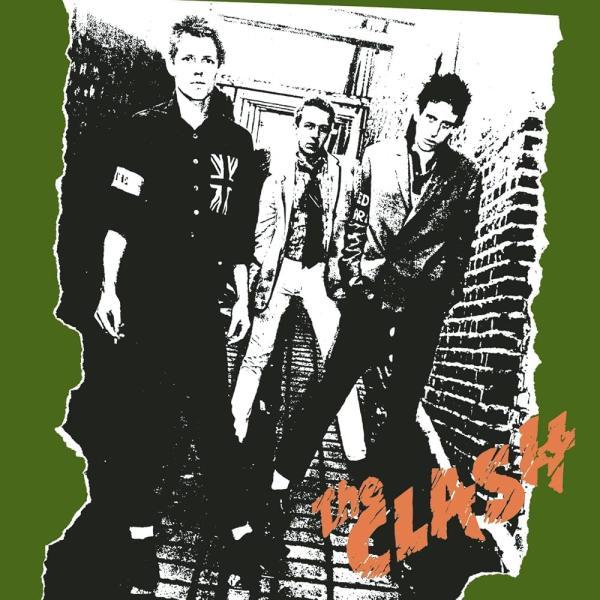
The Clash: The Clash
Album #229 - April 1977
Episode date - July 1, 2026

If you need proof that punk rock was thoroughly disenfranchised in America in 1977, you need to look no further than this album.
The Clash might as well have been invisible to the American music establishment. Released in England in April ’77, this album didn’t see daylight in the United States until July 1979! As a result, the British release probably did more for the European import market than any other album in history, as it became the best-selling import album of all time.
In defense of the American music industry, it already had its hands full before the onset of punk. American rock aficionados were still debating ‘Country Rock’ vs. ‘Progressive’, while also actively debating the validity of disco. Longtime music fans could barely tolerate yet another trend to confound them. Punk rock garnered attention in ’77, and most listeners treated it like an unwanted bastard child. European press saw dollars in the shock value but American press acted as though it sensed a disease, and dismissed all punk acts out of hand.
America saw Punk, the English variety in particular, as something dangerous, something that needed to be contained, like nuclear waste. The Sex Pistols’ disastrous tour of North America only added fuel to the fire, making it almost acceptable to enact violence on anyone who adopted punk’s fashion sense (I saw this with my own eyes when a group of jocks attacked a table of spike-haired teenagers at a local bar in 1978).
Well, it turns out that America’s initial assumptions about punk rock were quite incorrect. Under the gruff exterior, there was a political underbelly that challenged the status quo at every turn. Punk rockers despised complacency, and one band in particular proved to be quite eloquent about their sense of purpose.
The Clash drew inspiration from the Sex Pistols and the American groups, but their rebelliousness was not about anarchy. It was about establishing an identity and enacting street-level politics. Someone called them ‘the only band that matters’ and the phrase stuck, because in 1977, it wasn’t just hyperbole. The Clash were full of youthful energy, combined with a political purpose that made other punk bands look juvenile by comparison.
As a member of the 101’ers, Joe Strummer was part of the English pub rock scene that preceded punk, while Mick Jones was trying to piece together his own post-pub outfit. On different occasions, they each saw the Sex Pistols and were inspired by the possibilities presented by gaining ground level entry to a ferocious movement that did away with the implied hierarchy of established music trends. Love songs and fantasy-laced poetry were off limits. Strummer and Jones set to writing songs about issues that they faced, and the reality that surrounded them. “White Riot” succinctly confronted racism and police brutality in less than two minutes, while “Janie Jones” attacks class structure and youthful indifference. Perhaps most notorious was “I’m So Bored with the U.S.A.”, a direct hit aimed at the way America’s superficial culture permeated almost every aspect of British life. There were songs that attacked the record industry (“Remote Control”) and then there were singles (“Complete Control”) that attacked the label for capitalizing on songs that attacked the label! This was no ordinary youth rebellion but rather a series of public service announcements, with very loud guitars.
By the time CBS got around to releasing the album in America, the Clash was a well-known entity. The label culled off four of the original songs, then added five that were previously available only as import singles. The change messed up the original flow and continuity but it’s hard to argue when the new songs included “White Man in Hammersmith Palais” and “Complete Control”, two of the most potent punk anthems ever written. The British album was perfect, but the belated American version somehow improved on that perfection. In either version (and you should probably own both), “The Clash” stands as testament not only to the validity of punk rock, but also to the revalidation of genuine roots rock rebellion.
Featured Tracks:
Janie Jones
Remote Control
I'm So Bored with the USA
White Riot
Hate and War
What's My Name
Deny
London's Burning
Career Opportunities
Cheat
Protex Blue
Police & Thieves
48 Hours
Garageland
April 1977 - Billboard Charted #126 (in 1979)
Related Shows
Bruce Springsteen: The Wild, The Innocent & The E Street Shuffle
Album #179 - September 1973