


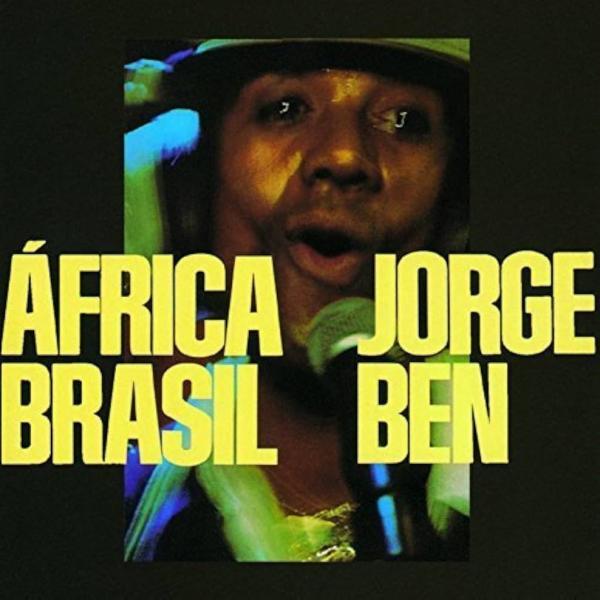
Jorge Ben: Africa Brasil
Album #218 - July 1976
Episode date - February 4, 2026

The ‘Tropicalia’ movement of the late ‘60s introduced psychedelic touches and political content to Brazilian music, which in turn gained some international exposure for its main constituents.
Usually, exposure is considered a good thing, but not if your government sees it otherwise. In retrospect, it seems incredible that musicians could have been jailed simply for embracing a musical style that was deemed ‘untraditional’, but that was how the Brazilian government functioned in the late ‘60s.
Jorge Ben had a career so long and varied that it predates the Beatles influence on Brazilian music (known as ‘Tropicalia’). Starting professionally in 1963, he provided some of the best samba and bossa nova-style guitar-based music to come out of Brazil, including the international hits, “Chove Chuva” and “Mas Que Nada”. His friendship with other luminaries such as Gilberto Gil and Caetano Veloso caused Ben to be identified with the Tropicalia movement, but his own stylistic shift was much more rhythmic than psychedelic, and he remained distant enough to avoid the political backlash that damaged or destroyed the careers and even the lives of some of the ‘Tropicalistas”. Perhaps due to his reputation as a celebrity in Brazil, Ben sidestepped that drama, and his influence remained more musical than political.
By 1976, Jorge Ben was a veteran but still quite adventurous, trying to find new ways to present Brazilian rhythms in the context of other styles. “Africa Brasil” redefined samba as funk music, a move that was both daring and exhilarating. Lyrically, the opening track (subtitled “Umbabarauma”) is a simple ode to a soccer player and the influence he and his team have on Brazilian culture. Underneath the lyrics, though, is one of the most powerfully funky and contagious samba rhythms ever concocted. Much of the rest of the album covers heavier topics, including the writings of a pharaoh in 2,000 B.C. (“Hermes Termegisto”) and other philosophy in general (“O Filosofo”). “Taj Mahal” tells a bit of the story behind the namesake’s creation, with a melody so captivating that Rod Stewart saw fit to steal a significant part of it for one of ‘his own compositions’ (the wretched “Do Ya Think I’m Sexy”).
Sure, most Americans won’t understand the Portuguese lyrics, but do we really worry about the lyrics when listening to James Brown? To get a feel for what the album sounds like, imagine if the band War hailed from Brazil and Isaac Hayes flew down to produce them. "Africa Brasil” is full of airtight grooves, but it also playful and melodic. It sounds like it doesn’t take itself too seriously, making it a fun listen that withstands the test of time.
Featured tracks:
Ponta de Lança Africano (Umbabarauma)
Hermes Trismegisto Escreveu
O Filósofo
Meus Filhos, Meu Tesouro
O Plebeu
Taj Mahal
Xica da Silva
A História de Jorge
Camisa 10 da Gávea
Cavaleiro do Cavalo Imaculado
África Brasil (Zumbi)
July 1976 – Billboard Did Not Chart
Related Shows
- 1 of 21
- ››
